David Wood / Dw2
Each of these books gave me plenty to think about. I’m grateful in every case for the effort and inspiration of the authors.
But one of these books stands out as being even more impressive and impactful than all the others.
It’s The Revenge of Power, by Moisés Naím.
Read moreFrank Racioppi / Medium
Rating: Four out of Four Voting Machines
Ease Of Reading: Well-constructed and lucid argument about the resurgence of authoritarianism in the world today. Length:328 pages.
When To read: Go to YouTube and search for the clip where Donald Trump says being President for life is a good idea and then realize our democracy is in peril.
Moisés Naím, the author, has some serious street cred. He is a Distinguished Fellow at the Carnegie Endowment for International Peace. In 2013, the British magazine Prospect listed Naím as one of the world’s leading thinkers. In 2014 and 2015, Naím was ranked among the top 100 influential global thought leaders by Gottlieb Duttweiler Institute (GDI) for his book The End of Power.
Read moreGideon Rachman / Financial Times
The Revenge of Power: How Autocrats Are Reinventing Politics for the 21st Century
By Moisés Naím
St Martins Press
£23.99/$29.99
A leading international affairs journalist takes on one of the big political puzzles of our era — why is authoritarianism making a comeback? Naím skilfully combines reportage with social-science research to identify the new tactics used by authoritarians, highlighting the three “P”s: populism, polarisation and “post-truth”.
Read moreAdam Gopnik / The New Yorker
Meet the new boss, same as the old boss, as the song has it—and now let us meet the new dictators and see whether they are the same as the old. Are the authoritarians who grace, or disgrace, our world, from Recep Tayyip Erdoğan to Vladimir Putin, more like or unlike their twentieth-century predecessors? This is not an academic question—well, actually, it is an academic question, but a good kind of academic question. Its answer has consequences for our actions.
Read moreDidi Kuo / The Washington Post
In “The End of Power,” Moisés Naím argued that power was decaying. The modern era was characterized by fluidity, by centrifugal forces that redistributed power away from long-standing centers of authority. Because of three revolutions — the more revolution, the mobility revolution and the mentality revolution — power was becoming easier to get but harder to maintain. The result was a tense combination of progress and instability.
Read moreJake Whitney / The Progressive
In his new book, The Revenge of Power: How Autocrats Are Reinventing Politics for the 21st Century, Moisés Naím contends that authoritarian power is on the rise globally, and he admonishes citizens to recognize and confront it.
Read moreGideon Rachman / The Financial Times
A lot of contemporary political commentary centres around the same disturbing puzzle — why is authoritarianism making a comeback? Moisés Naím is a US-based commentator who originally hails from Venezuela, which makes him well placed to understand the dangerous interplay between populism and authoritarianism. In The Revenge of Power (St Martin’s Press, £23.99), he skilfully combines reportage with social-science research to identify and analyse the three “P”s driving the global resurgence of authoritarianism: populism, polarisation and “post-truth”.
Read moreManuel Roig-Franzia / Washington Post
One surreal night in 2010, a team of forensic specialists under orders from Venezuela’s mercurial president, Hugo Chávez, lifted a coffin lid on live television.
Inside lay the remains of Simón Bolívar, the famed military leader and political icon who had freed vast stretches of South America from Spanish rule in the early 1800s. Chávez, who idolized the man known as El Libertador — The Liberator — had become fixated on proving a conspiracy theory that Bolívar had not died of tuberculosis, as had been widely accepted by historians, but rather had been poisoned by a confederacy of enemies that included Colombian aristocrats, the king of Spain and the president of the United States, Andrew Jackson.
Read morePat Zi / Joy on Paper
It was such an honor to talk to Dr. Moisés Naím.
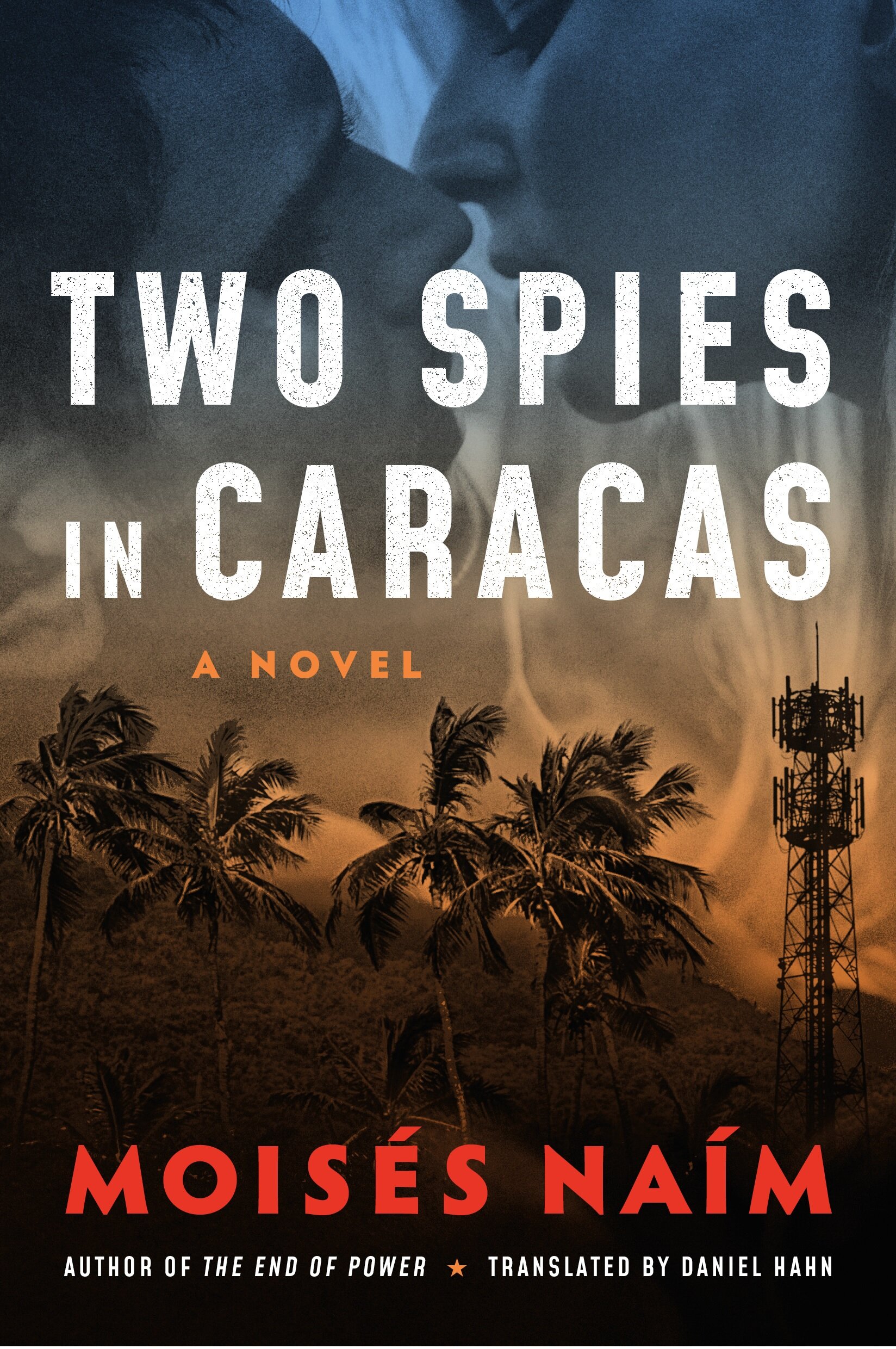
I have spoken a many global bestselling authors, many celebrities, and even the Poet Laureate. But never one of “world’s leading thinkers’ as he is known. I felt like I should have addressed him as Dr. Naím, but he was so gracious and so I got on a first time name with this great man. After all, as he pointed out, he is a first time novelist….and what a novel! Two Spies in Caracas is a powerful thriller that takes readers into the turmoil of a collapsing Venezuela.
It harkens back to the best of Helen McInnes who knew how to write about spies, romance, and political intrigues.
In one of history’s most dangerous revolutions when Hugo Chavez led a coup against the Venezuela government, two rival spies are pitted against each other. Cristina Garza works for the CIA. She has two goals: help stabilize the oil reserves and eliminate Cuba’s influence. At the same time Iván Rincón of Cuba’s Intelligence Directorate is determined to neutralizing any American agents. But soon in the dangerous streets of Caracas Iván and Cristina are caught in a tangled web of lies and deceits — and shifting alliances as they play a game of espionage and murder.
Moisés Naím is not only a great thinker…but a great novelist.
You will love this book!
Read moreJMK / DemocracyParadox.com
Early in my life I was drawn to power to impose my ideas onto the world. It was only natural to believe leaders were able to change organizations, businesses or even geopolitics to their whim. But I found my implicit sense of power was entirely wrong. There is a tradeoff between authority and influence. Leadership becomes a trap where it is limited in its options by those who are supposedly led. Managers make concessions to their workers to maintain a productive atmosphere.
Read moreAmericas Quaterly / Rachelle Krygier
Economist and TV host Moisés Naím on his new show, the dangers of "anti-politics," and separating fact from fiction in Venezuela.
Read moreFinancial Times / Andres Schipani
‘El Comandante’ aired across Latin America but blocked in late leader’s own country
Read moreDaily Sabah / 01.29.2017
The Venezuelan revolution will now be televised. The life of Hugo Chavez, who mesmerized Venezuela's impoverished masses before dying of cancer in 2013, is being dramatized in a Spanish-language TV series that is generating a backlash even before it airs.
Read moreWill Hutton / The Guardian
Power is leaching from the centre, even as the complexities of national and international challenges multiply. It is the hallmark of our times. Whether political or religious leaders, CEOs or five-star generals – all are more constrained in what they can do.
Read moreCarnegie Endowment for International Peace
Moisés Naím hosted a lively conversation about his book The End of Power with New York Times columnist Thomas Friedman and Carnegie Endowment President Jessica Mathews. The book has attracted significant attention. Bill Clinton said, “The End of Power will change the way you read the news, the way you think about politics, and the way you look at the world.”
Read moreGideon Rachman / Financial Times
There are plenty of people who argue that the financial crisis is a severe setback for globalisation. Come to think of it, I am one of those people. In a column I wrote just after the Davos meeting, I argued that you could see the process of globalisation going into reverse.
Read moreCarnegie Endowment for International Peace
Carnegie's President Jessica T. Mathews led a conversation between the audience and Foreign Policy editor Moisés Naím, SAIS Professor Francis Fukuyama, and Washington Post columnist David Ignatius on the main thesis of Naím's important new book Illicit: How Smugglers, Traffickers, and Copycats are Hijacking the Global Economy. Naím argues that traffickers are changing the world—transforming economies, reshaping politics, and capturing governments. In his view the pursuit of illicit profits is as powerful a driver of political upheaval and international instability as terrorism, and black-market networks are stealthily transforming global politics and economies.
Read more